
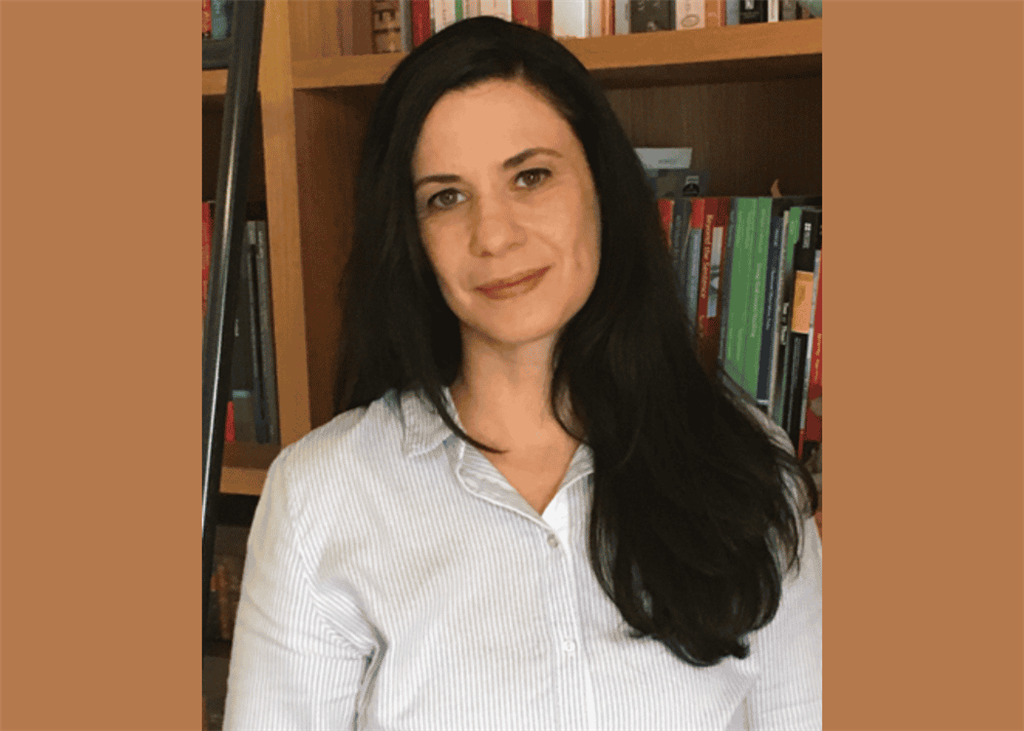
Every institution that delivers a great student experience has, somewhere in its structure, a person whose job is to make sure the invisible things work. The timetables align. The lecturers are in the right rooms. The registration runs smoothly. The certificates are ready on graduation day. At IDEA College, that person is Caroline Campbell and her title, Deputy Principal for Operations and Logistics, barely begins to describe what she actually does.
Caroline Campbell's career in the education sector began over twenty years ago, starting as a teacher and gradually transitioning into teacher training and educational management, both abroad and in Malta. That accumulated experience provided her with valuable insights into the workings of different educational institutions before she joined IDEA College six years ago.
The journey from classroom teacher to Deputy Principal is not a straight line, and Campbell is candid about how her path evolved. Throughout her years at IDEA College, she held several positions, including Programme Manager and Director of Studies. Despite her love for academic affairs, her keen eye for detail and strong organisational skills eventually drew her towards operations and logistics management.
It is a telling admission, that someone who genuinely loves academic work chose to move into operations because she recognised where her particular skills could make the most difference. That combination of academic sensibility and operational precision is precisely what makes her role so consequential.
The word "operations" in an educational context can sound administrative, even peripheral. Campbell's account of her working day suggests something rather different.
Her days typically begin with meetings across the departments she oversees, setting weekly targets, and tackling issues as they arise.
Her responsibilities include the recruitment of faculty, engaging faculty members for the delivery of modules, and following up on the planning phase of all programmes. The role requires constant communication and problem-solving to see to the needs of faculty and staff members, planning the delivery of programmes, and responding to unexpected challenges.
What emerges from her description is a role that is simultaneously strategic and deeply human. Much of the work involved in operations happens behind the scenes and often goes unnoticed, but the most rewarding aspect is its direct impact on the student's experience, from the efficient registration process to the smooth running of the programme, to the preparation of certificates and diploma supplements upon course completion.
That framing, the invisible work that shapes the visible experience, is central to how Campbell understands her purpose.
Ask Campbell about her proudest achievement, and she does not reach for a metric or a milestone. She talks about people.
One of her most significant achievements has been forming a team of multicultural faculty members consisting of lecturers with expertise from a broad spectrum of industries. This diverse blend of professional backgrounds not only enriches the curriculum but also provides students with a more dynamic and well-rounded academic experience. By bringing together such a varied group of educators, IDEA College has created a learning environment that fosters greater creativity, critical thinking, and real-world application.
This matters enormously for agents. The quality of the teaching experience at any institution depends not just on what is on paper but on who walks into the lecture room - their professional depth, their ability to connect theory to practice, and their capacity to engage adult learners who have already spent years in the working world. Building and sustaining a faculty of that calibre is an operational achievement, and it is one that Campbell has driven directly.
One of the most consistent themes in Campbell's account of her role is her insistence that operational efficiency is not an end in itself, but a means of delivering a better student experience.
Throughout the student registration phase and the planning of programme delivery, the approach is always student-centred. Since IDEA College caters to a niche audience, every effort is made to tailor the registration process and programme schedules to meet the unique requirements of students.
Campbell has a clear-eyed view of where technology adds value and where it does not, which is itself a form of operational intelligence.
IDEA College is currently working on enhancing its Learning Management and Customer Relationship Management systems with the aim of streamlining communication among all stakeholders, while increasing efficiency and productivity. These systems are also used for data analytics to help anticipate students' needs and new trends, allowing the college to optimise response time, planning and resource allocation both in the short and long-term.
But she is equally direct about the limits of automation:
"Automation and AI will certainly continue to play a huge role in streamlining repetitive tasks and enhancing decision-making processes. However, to maintain student-centredness, flexibility, and effective communication with all stakeholders, the human touch will always be necessary. Students need to be able to interact with humans whenever they need guidance, support, or mentoring, and will still require human presence to build a relationship of trust with their education provider and enjoy a safe study environment."
That is not a romantic rejection of technology. It is a precise description of where the machine ends and the educator begins.
Perhaps the most valuable insight Campbell offers is her diagnosis of the most common operational failure in higher education.
She believes that most educational institutions fail to create an environment where departments collaborate to bring about significant improvements within the organisation. This often leads to departments working in silos, hindering the growth and efficiency of the organisation. At IDEA College, the approach is more integrated. Inter-departmental sharing of knowledge and resources and collaboration are encouraged, providing a more holistic approach when supporting students and faculty, from the onboarding stage to the successful completion of a programme.
For agents, this is not an abstract point. When a student encounters a problem, a timetable conflict, a registration issue, a query about assessment, the quality of the response they receive depends entirely on whether the people handling it are working together or past each other. An institution where departments collaborate fluently is one where students experience consistency and feel genuinely supported.
The academic quality, the flexibility, the support structures, and the pathways all depend, in the end, on operational execution.
Campbell's long-term goal is clear: to further enhance the use of technology to maintain operational efficiency and continuously improve the student academic journey as IDEA College continues to grow, ensuring that no matter how much the college grows, the operational practices remain efficient and effective, and the student academic experience continues to be a positive one.
Behind every diploma that IDEA College hands to a graduate, there is a system of coordination, communication, and care that Caroline Campbell and her departments have built and sustained. For agents who want to know that an institution has its house in order: the answer, at IDEA College, is yes.











2026 SchoolsandAgents (C) - Developed by Websuccess