
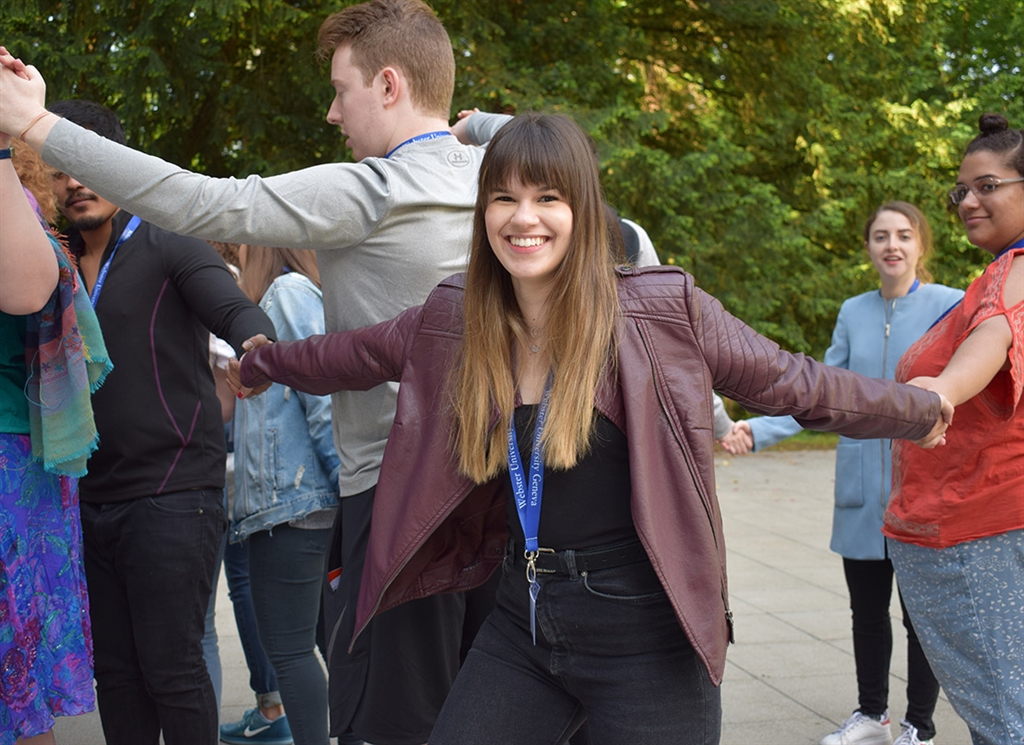
At Webster University Geneva, the Global Citizenship Programme (GCP) is more than just a curriculum requirement — it is the very cornerstone of every undergraduate experience. Rooted in the transformative power of a liberal arts education, the GCP offers an innovative, interdisciplinary approach that equips students with the intellectual agility, global awareness, and practical skills needed to succeed in an increasingly interconnected world.
The liberal arts are not a single subject, but a way of learning that fosters critical thinking, problem-solving, and effective communication. Students explore a variety of disciplines — from history, science, and literature to art, mathematics, and philosophy — creating a broad educational base that prepares them for a wide range of careers and life challenges. By engaging with different perspectives and connecting ideas across fields, students grow into adaptable, informed, and creative thinkers.
At Webster Geneva, this philosophy is brought to life through the GCP, where students are encouraged to ask big questions, understand global contexts, and lead with purpose.
All undergraduate students across Webster’s international network participate in the Global Citizenship Programme, making it a unifying academic journey that starts in the very first semester.
The GCP curriculum covers six key knowledge areas:
Roots of Cultures (ROC): Explore what shapes identities and communities.
Social Systems and Human Behaviour (SSHB): Understand how societies function and evolve.
Physical and Natural World (PNW): Investigate the scientific principles of our environment.
Global Understanding (GLBL): Gain cross-cultural insights through language and culture studies.
Arts Appreciation (ARTS): Experience the creative process and cultural expression.
Quantitative Literacy (QL): Develop analytical skills to solve practical, real-world problems.
This is not a checklist of courses, but a globally connected academic foundation designed to foster curiosity, cultural fluency, and a lifelong passion for learning.
The GCP does not simply broaden academic knowledge — it actively develops transversal skills that are vital in any profession. These include:
Critical Thinking: Tackling complex issues with insight and innovation.
Oral Communication: Presenting ideas confidently and persuasively.
Written Communication: Writing with clarity, precision, and impact.
Ethical Reasoning: Making responsible, principled decisions.
Intercultural Competence: Navigating and contributing effectively in diverse cultural contexts.
Employers consistently seek graduates who can adapt, collaborate, and lead across borders — qualities that the GCP intentionally cultivates.
Academic advisors at Webster Geneva work closely with students to integrate the GCP into their degree path. This ensures a balance between major-specific courses and the broad, interdisciplinary learning that distinguishes Webster graduates. As Dr Julianna Sandholm-Bark, Head of the Global Citizenship Programme, explains:
“The faculty teaching GCP courses are committed to helping you sharpen your intellectual agility, a capacity for independent learning, and an enthusiasm for collaboration — all of which are closely aligned with professional effectiveness and personal fulfilment through lifelong learning.”
In addition to core GCP courses, students can choose from a range of electives that align with Webster’s ethos of respect, wellness, and sustainability. Many courses are linked to the United Nations Sustainable Development Goals (SDGs), encouraging students to engage with pressing global issues.
Elective themes include:
French language and culture (including a Minor in French, supporting integration into the Swiss job market)
Ethics and philosophy
Science and sustainability
The arts — creative writing, visual arts, acting
Sample GCP courses include: Introduction to Ethics, Making Decisions, Science in the News, Elementary French, Public Speaking, and Intercultural History of Art.
An added advantage: some GCP requirements can “double-count” towards a second major, minor, or certificate, giving students greater academic flexibility and career options.
The Global Citizenship Programme is not an add-on to the Webster Geneva experience — it is the core. It shapes graduates who are not only academically prepared, but also globally minded, ethically responsible, and professionally agile.
For agents supporting prospective students, the GCP offers a distinctive selling point: a truly international, future-ready education that prepares graduates for life beyond their degree.
Discover more about the Global Citizenship Programme at Webster University Geneva and how it can transform your students’ futures.











2026 SchoolsandAgents (C) - Developed by Websuccess