
Successful Cambridge exam preparation is built through consistency. Students need time to understand the structure of the examination, become comfortable with the different task types and recognise where further work is required. A handful of practice papers completed shortly before the exam may highlight weaknesses, but it does not always leave enough time to address them. Regular digital practice can give learners the repetition, familiarity and confidence they need throughout their course.
Virtual Educators LearningHub offers schools a structured way to provide additional Cambridge B2 First for Schools practice alongside classroom teaching. For education agents working with schools, language centres and young learner programmes, it represents an opportunity to recommend an examination preparation resource that supports both guided instruction and independent study.
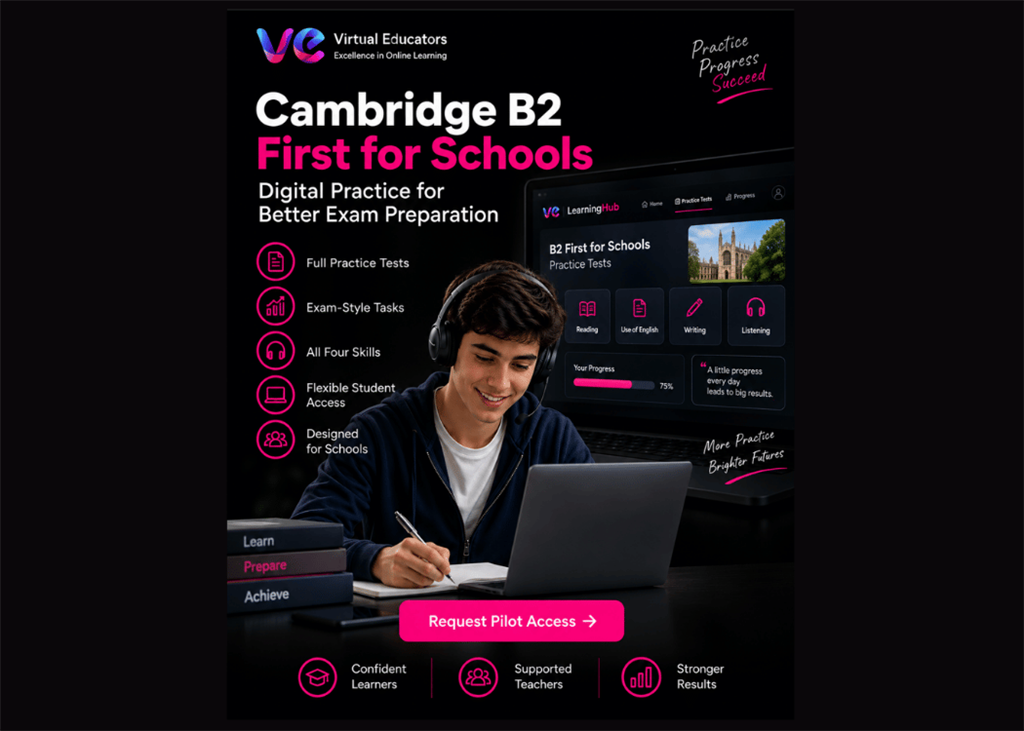
LearningHub gives students access to digital B2 First for Schools practice tests covering the main areas of the examination. Learners can work on Reading and Use of English, Writing, Listening and Speaking preparation, while becoming more familiar with the style, timing and expectations of Cambridge exam tasks.
This continued exposure matters because examination performance is influenced by more than language ability alone. A student may have the required level of English but still lose valuable time because they are uncertain about the instructions, unfamiliar with the format or nervous about moving between different task types. When practice is incorporated throughout the preparation programme, these practical aspects of the examination gradually become more familiar.
Schools can therefore give learners additional preparation opportunities without increasing classroom hours. Students can continue practising outside scheduled lessons, while teachers retain classroom time for explanation, discussion, feedback and the development of the language skills that require direct support.
Digital preparation is most effective when it works alongside strong teaching rather than attempting to replace it. LearningHub is designed to complement an existing Cambridge preparation programme and can be incorporated into homework, revision schedules and independent study plans.
Teachers can direct students towards further practice in particular areas, helping them focus their efforts more purposefully. If a learner is comfortable with reading tasks but needs additional listening practice, for example, the teacher can encourage more work in that area. This makes digital practice more relevant to each student and allows valuable lesson time to be used where teacher input can make the greatest difference.
For agents, this relationship between classroom learning and digital practice is an important point when discussing preparation options with partner schools or parents. LearningHub is not simply an extra collection of exercises. It provides a structured resource that schools can integrate into their existing academic approach, giving students more opportunities to apply what they have learned.
Exam confidence rarely appears overnight. It develops as learners encounter tasks repeatedly, understand what is expected of them and begin to see evidence of their own progress. By providing flexible access outside the classroom, LearningHub allows students to practise at different stages of their course instead of postponing serious exam preparation until the final few weeks.
This can help learners approach the examination with greater familiarity and a clearer understanding of its demands. They have more time to identify difficult areas, seek guidance from their teachers and return to the relevant skills before exam day. The result is a more measured preparation process in which revision becomes part of the course rather than a last minute response to an approaching examination.
Independent practice can also encourage students to take greater responsibility for their learning. While teachers remain central to the preparation process, learners gain another way to review their skills and make productive use of time outside lessons. This flexibility may be particularly valuable for students balancing school commitments, extracurricular activities and examination preparation.
Schools do not all organise their Cambridge preparation programmes in the same way. Some may wish to provide LearningHub access to a single B2 First for Schools class, while others may want to introduce it across a complete examination programme or a wider network of centres.
Virtual Educators can provide institutional solutions suited to these different requirements. This flexibility allows schools to introduce digital practice for the first time or expand the resources available within an established Cambridge preparation programme.
Agents can play a useful role by bringing the platform to the attention of suitable partner institutions. Schools looking to strengthen their examination offer, give students more opportunities for independent practice or provide greater flexibility outside classroom hours may find LearningHub particularly relevant. It can also add value to conversations about programme quality by showing how regular practice is supported throughout the student journey.
Good preparation gives learners the opportunity to practise, reflect and improve well before they enter the examination room. By combining classroom instruction with structured digital practice, schools can help students build familiarity with B2 First for Schools tasks while developing confidence gradually across the course.
Virtual Educators LearningHub provides a practical way to extend preparation beyond the classroom without adding further teaching hours. Agents interested in introducing the platform to partner schools can contact Virtual Educators at [email protected] to discuss pilot access and institutional options.














2026 SchoolsandAgents (C) - Developed by Lunarsors