
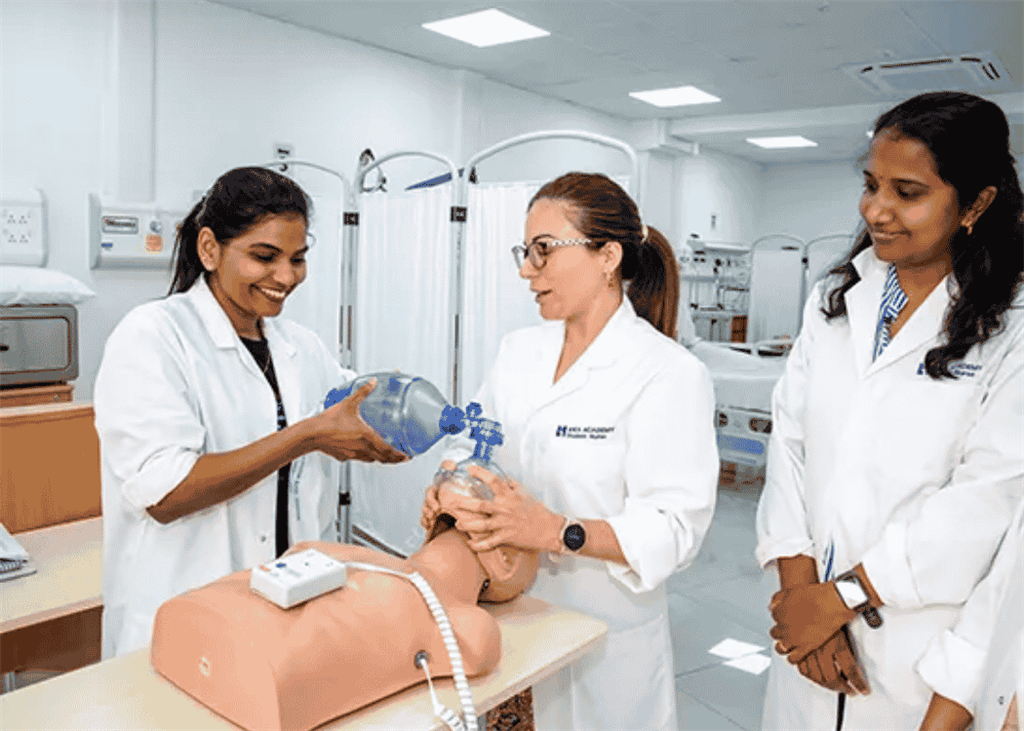
Europe is entering a demographic period without precedent. The European Commission's most recent Demography Report projects that the EU population will peak around 2029 before beginning a long decline, and that by 2050 nearly one in three residents will be aged 65 or over, up from roughly one in five today. The number of people needing long-term care support is expected to rise from around 36 million to 48 million by 2070, with the share of over-80s set to double over the same period.
The workforce needed to meet that demand is not keeping pace. The European Parliamentary Research Service estimates a shortage of around 1.2 million doctors, nurses and midwives across the EU, a gap widened by a health workforce that is itself ageing (over a third of doctors and a quarter of nurses in the EU are already over 55) and by working conditions that continue to drive burnout and early exit from the profession.
Malta mirrors this picture closely, and in some respects more acutely. The country's ageing population is driving sustained demand for elderly care and nursing services, while the Malta Chamber of Commerce and the Malta Union of Midwives and Nurses have both flagged sustained nurse shortages across hospitals and care homes as a structural risk rather than a temporary gap. CEDEFOP classifies health associate professionals as a high-shortage occupation in Malta, and estimates put the number of open nursing vacancies at any given time in the hundreds, concentrated at Mater Dei Hospital and in elderly care facilities. The Maltese government's own National Health Systems Strategy 2023-2030 and its first National Health Workforce Strategy both acknowledge a longstanding reliance on foreign-trained health professionals to keep services running, alongside sustained investment in training pathways for nurses, allied health professionals and care practitioners.
For agents and international students, this is the context worth understanding: Malta and Europe are not experiencing a passing staffing difficulty. They are restructuring how care and health services will be delivered for decades to come, and that restructuring depends heavily on internationally trained professionals being able to enter, requalify within, and build careers inside the European system.
A Qualification Pathway Built Around That Reality
IDEA College has developed a course ladder in care and health that runs from entry-level bridging provision through to doctoral study, allowing students, wherever they are starting from, to build toward the level of practice they are aiming for. The table below sets out ECTS credit weighting, expected duration and placement or clinical components for each programme, drawn directly from IDEA College's published prospectus.
|
Programme |
MQF |
ECTS |
Duration |
Placement / Clinical Component |
|
Bridging Course – Nursing Studies (Certificate) |
5 |
41 |
8 months (PT); FT intakes available |
Yes - 330-hr clinical placement (11 ECTS), multidisciplinary settings |
|
UG Higher Diploma for Care Practitioners |
5 |
120 |
FT 20 mo / PT 24 mo |
Community-Based Care Practicum module |
|
B.Sc. in Nursing (Top-Up) |
6 |
60 |
FT 12 mo / PT 18 mo (+ min. 6 mo dissertation) |
None - academic top-up for registered nurses |
|
MSc Healthcare Management and Leadership |
7 |
90 |
FT 12 mo / PT 25 mo (+ min. 6 mo dissertation) |
None - management and leadership focus |
|
MSc Advancing Nursing Science |
7 |
90 |
FT 10 mo / PT 20 mo (+ 6 mo dissertation) |
None - clinical specialisation route |
|
MSc Elderly Care Management |
7 |
90 |
FT 12–15 mo / PT 24 mo (+ min. 6 mo dissertation) |
None - management and leadership focus |
|
MSc Public Health |
7 |
90 |
FT 18 mo / PT 24 mo (+ min. 6 mo dissertation); weekend-school intake available |
None – applied studies - policy and academic focus |
|
Doctorate in Health Science |
8 |
240 |
5 – 7 years |
Weekend schools – Applied studies – police and practice |
Read together, this ladder does something few single institutions offer: it gives an internationally trained nurse a legitimate route in through the bridging course, a Maltese registration at the end of it, and, for those who want to keep progressing, Master's and doctoral study in the same field, without having to start again at a different institution each time their ambitions grow.
Why Agents and Students Keep Choosing IDEA College
IDEA College's flexible blended and weekend-school delivery models (the MSc in Public Health and the Doctorate in Health Science, for example, both offer weekend-school intakes) are built on the recognition that most students in this field are already working, often already caring for others, and cannot pause their income or their responsibilities to study full time. Full-time options remain available for non-EU students who require them for visa purposes, but the underlying design philosophy of study fitting around life, not the reverse, runs through the whole care and health portfolio.
Every course sitting under IDEA College's MQF Level structure is accredited by the Malta Further and Higher Education Authority (MFHEA), and Malta's participation in the Bologna Process means these qualifications carry recognition across the 49 countries of the European Higher Education Area. For an agent advising a family on where their money and their child's, or their own, future is best placed, that is not a marketing claim; it is a verifiable regulatory fact, and it is the same assurance that underpins the bridging course's route to Maltese nursing registration.
IDEA College's presence in this space is not a recent pivot toward a trending sector. Founded in 2005 as the IDEA Leadership and Management Institute and grown through IDEA Academy into IDEA College, the institution has spent years building relationships with Malta's healthcare employers, regulators and professional bodies. Recognition and trust are also the result of constant college investments in state-of-the-art facilities to ensure the best learning experience possible. This consistency matters in a field where recognition, registration pathways and employer trust take years, not marketing cycles, to establish.
The Bottom Line for Agents
Europe needs qualified care and health professionals for the next several decades, not the next few years. Malta needs them now. IDEA College offers a genuine pathway, from bridging course to doctorate, built on accreditation that travels, delivery models that respect working adults' lives, and two decades of standing. For agents placing students into this field, that combination of urgency, structure and stability is a rare and compelling package to offer.
For more information visit our website: mt.ideaeducation.com










2026 SchoolsandAgents (C) - Developed by Websuccess