
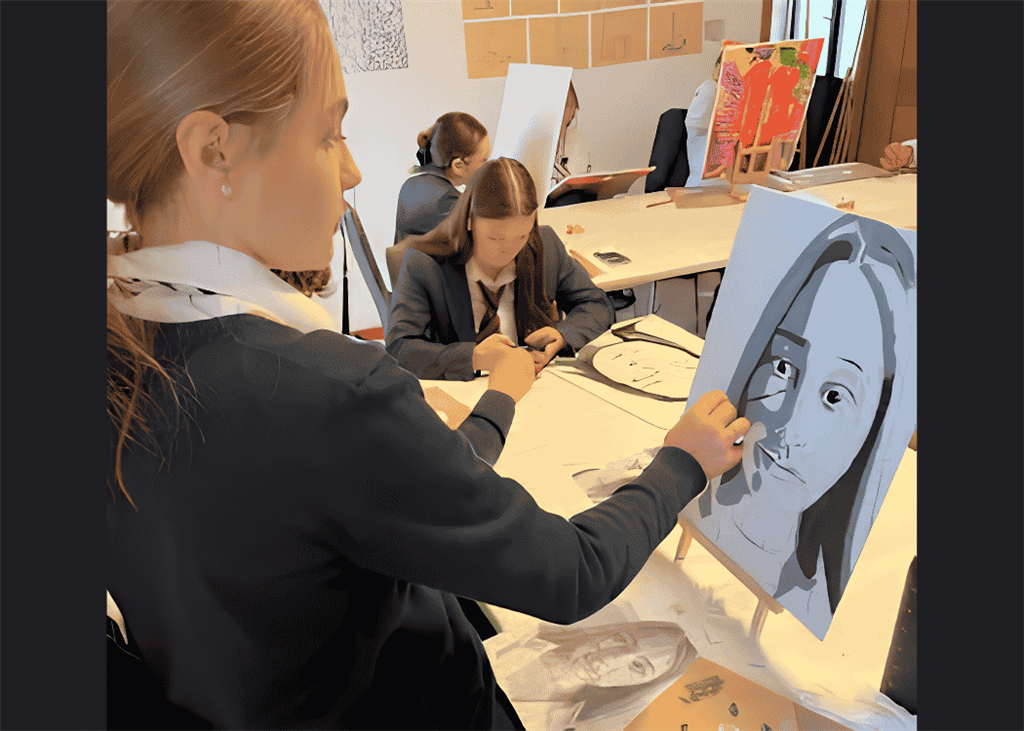
For education agents advising students on secondary school options abroad, the course list can reveal far more than a collection of subjects. It can show how flexible a school is, how well it supports different academic ambitions and whether students have enough choice to build a programme that genuinely reflects where they want to go next. For the 2026 and 2027 academic period, students following the Ontario curriculum can choose from a broad range of courses across Grades 9 to 12, including English, mathematics, sciences, business, languages, humanities, visual arts, social sciences, law, politics, health and physical education.
For international education agents, this breadth is particularly useful when speaking with families who are looking for more than a straightforward academic programme. Some students already know that they want to pursue science, engineering, business or the humanities at university. Others are still discovering their strengths and may benefit from being able to combine traditional academic subjects with creative, practical and interdisciplinary options. The course selection available across the four secondary grades makes it possible to support both types of student, while gradually increasing academic specialisation as learners move closer to postsecondary study.
Grade 9 gives students the opportunity to establish the academic foundations they will need for the years ahead while still exploring a varied curriculum. Alongside core subjects such as English, mathematics and science, students can study Canadian geography, healthy active living, visual arts and introductory business. Language options include Core French, Italian and Spanish, while English as a Second Language is available for students who need additional language development before progressing further through the curriculum.
The inclusion of business at this stage is particularly interesting for students who are curious about entrepreneurship. Launching and Leading a Business introduces areas such as accounting, marketing, financial management, human resources, production and information and communication technology, helping students understand how the different functions of a business connect.
Grade 9 mathematics also combines traditional mathematical knowledge with practical applications. Students work across number sense, algebra, geometry, data, probability and financial literacy while also using mathematical modelling and coding. This gives them a foundation that can later support progression into more specialised mathematics courses in the senior grades.
By Grade 10, the curriculum begins to offer students more opportunities to connect their academic subjects with future study and career choices. English, mathematics, science and Canadian history remain important components, but students can also select courses such as visual arts, business and communications technology. Civics and Citizenship and Career Studies are offered as half credit courses, introducing students to areas including civic engagement, political processes, career planning, transferable skills and personal financial management.
Communications Technology is a particularly practical choice for students interested in media and digital communication. The course can involve television and video production, audio, print and graphic communications, photography, interactive media, animation and web design. For agents advising students who are considering careers in media, communications, design or related creative industries, this can provide a useful introduction before more specialised postsecondary study.
Students who require continued English language support can progress into Level 2 English as a Second Language, where they develop listening, speaking, reading and writing skills for both everyday and academic purposes. This structured progression is important for international students because language development can take place alongside wider academic preparation rather than being treated as a completely separate element of their education.
Grade 11 is where the range of possibilities becomes especially valuable for agents working with students who are beginning to think seriously about university, college and future careers. The curriculum includes university preparation subjects such as English, Functions, Biology, Chemistry and Physics, but these sit alongside a wide selection of creative, commercial, social science and humanities courses.
Students interested in business can study Financial Accounting Fundamentals or Marketing. The accounting course introduces principles and procedures, financial analysis, computerised accounting and ethical issues, while Marketing looks at consumer behaviour, marketing research, strategy and the development of a marketing plan.
There is equally strong provision for students whose interests lie in the humanities and social sciences. Options include World History to the End of the Fifteenth Century, Understanding Canadian Law and Introduction to Anthropology, Psychology, and Sociology. These subjects encourage students to analyse evidence, evaluate different perspectives, conduct research and develop informed arguments, skills that become increasingly important as they approach higher education.
Creative students also have several routes available. Grade 11 choices include Visual Arts, Sculpture and Photography, allowing students to develop practical work while strengthening creative and critical analysis skills. Photography students must have access to a DSLR camera or a smartphone with a camera, an important detail for agents to communicate when discussing course selection with families.
One of the more distinctive options is The Science of Decision Making, Wellbeing, and Human Change. This interdisciplinary course brings together biology, psychology and data analysis to examine areas such as decision making, stress, motivation, habits and behaviour change. It is an example of how the senior curriculum can extend beyond traditional subject boundaries and introduce students to areas of study that connect strongly with contemporary academic and professional interests.
For students approaching graduation, course selection becomes closely connected to postsecondary admissions requirements. The Grade 12 curriculum includes advanced university preparation courses across mathematics, sciences, English, humanities, law, politics and social sciences, together with business, creative subjects, languages and health related options.
Students aiming for science, engineering, economics and certain business programmes can select subjects including Advanced Functions, Calculus and Vectors, Biology, Chemistry and Physics. Calculus and Vectors develops understanding of rates of change, derivatives, vectors, lines and planes in three dimensional space, while Advanced Functions explores polynomial, rational, logarithmic and trigonometric functions. Data Management offers another mathematics pathway, with a strong emphasis on statistics, probability and the analysis of large amounts of information, making it particularly relevant to students considering business, social sciences or humanities programmes.
Students interested in science can continue into Grade 12 Biology, Chemistry and Physics. These courses provide more detailed preparation in areas including biochemistry, molecular genetics, organic chemistry, electrochemistry, energy transformations, electromagnetic radiation, quantum mechanics and special relativity. Each builds upon the relevant Grade 11 prerequisite, highlighting the importance of planning course choices carefully across more than one academic year.
There is also considerable scope for students with interests outside traditional STEM subjects. Canadian and International Law explores legal issues in Canadian and international contexts, while Canadian and International Politics examines how governments, stakeholder groups, multinational corporations and other institutions respond to domestic and international issues. World Issues looks at sustainability, globalisation, human rights, quality of life and international conflict, while Philosophy develops reasoning, argumentation and inquiry across areas such as ethics, metaphysics, epistemology and political philosophy.
For students interested in leadership and management, Business Leadership: Management Fundamentals explores decision making, group dynamics, workplace stress, employee motivation, communication, ethics and social responsibility. Those pursuing creative pathways can continue with Visual Arts, Sculpture or Photography, while students considering sport, health and related university programmes can choose courses including Introductory Kinesiology and Health and Physical Education, Recreation.
International students can also continue developing their language skills throughout the secondary programme. English as a Second Language progresses from introductory communication in Level 1 through increasingly sophisticated academic reading, writing, listening and speaking in later levels. By Level 4, students are expected to communicate with increasing fluency and accuracy in classroom and social situations and to develop the presentation, reading and writing skills needed for success across their other subjects.
Italian is available across several levels, and Spanish is also offered at introductory and more advanced stages. These courses are designed not only around language competence but also around understanding the communities and cultures in which the languages are spoken. For students who already have an international outlook, continuing with another language can add an important dimension to their secondary education.
Agents should, however, pay close attention to the way individual credits count towards graduation and postsecondary requirements. For example, Italian Level 1 and Level 2 can count towards the Ontario Secondary School Diploma as compulsory or optional credits, but they do not count as Grade 12 credits. Students who require six Grade 12 level credits for postsecondary applications therefore need to ensure that their overall course selection meets those requirements.
The most useful conversation an education agent can have with a student is often not simply about which subjects sound interesting. It is about where those subjects lead. A student hoping to study engineering may need to plan their mathematics and science progression several years in advance. A student considering psychology, law, business, communications or design may benefit from combining relevant specialist subjects with the English and analytical courses required for university admission.
Prerequisites therefore deserve careful attention. Grade 11 Biology requires Grade 10 Science, Grade 12 Biology requires Grade 11 Biology, and senior mathematics follows a similarly structured progression. English also advances sequentially from Grade 10 into Grade 11 and Grade 12 university preparation. Helping students understand these connections early can prevent them from discovering later that a university programme requires a subject for which they have not completed the necessary prerequisite.
At the same time, students should not feel that every choice must be driven solely by university admissions. A balanced secondary programme can include subjects that develop creativity, communication, confidence, physical wellbeing or broader cultural awareness. The range of courses available for 2026 and 2027 gives students room to combine academic preparation with genuine personal interests, creating a secondary school experience that is both purposeful and varied.
For education agents, that flexibility is an important part of the conversation with families. Rather than presenting a secondary school programme simply as a route towards a diploma, agents can help students think of it as a carefully planned academic journey in which each year builds on the last. With options stretching from sciences and mathematics to business, languages, arts, law, politics, social sciences and sport, students have considerable scope to create a pathway that reflects both their abilities and their longer term ambitions.














2026 SchoolsandAgents (C) - Developed by Lunarsors