
For many international students, choosing where to study is no longer simply a question of finding the right university, course or destination. Increasingly, students and their families are looking several years ahead and asking what that education could lead to once graduation arrives. They want to understand career prospects, employment opportunities, workplace expectations and whether the investment they make in an international education is likely to support their longer term ambitions.
This shift has important implications for education agents and counsellors. Advising a student on institutions, programmes, entry requirements and destinations remains essential, but today's conversations are increasingly extending into employability and career outcomes. Counsellors therefore need a broader understanding of what happens after a student completes their studies and how different educational choices can influence the pathway from classroom to career.
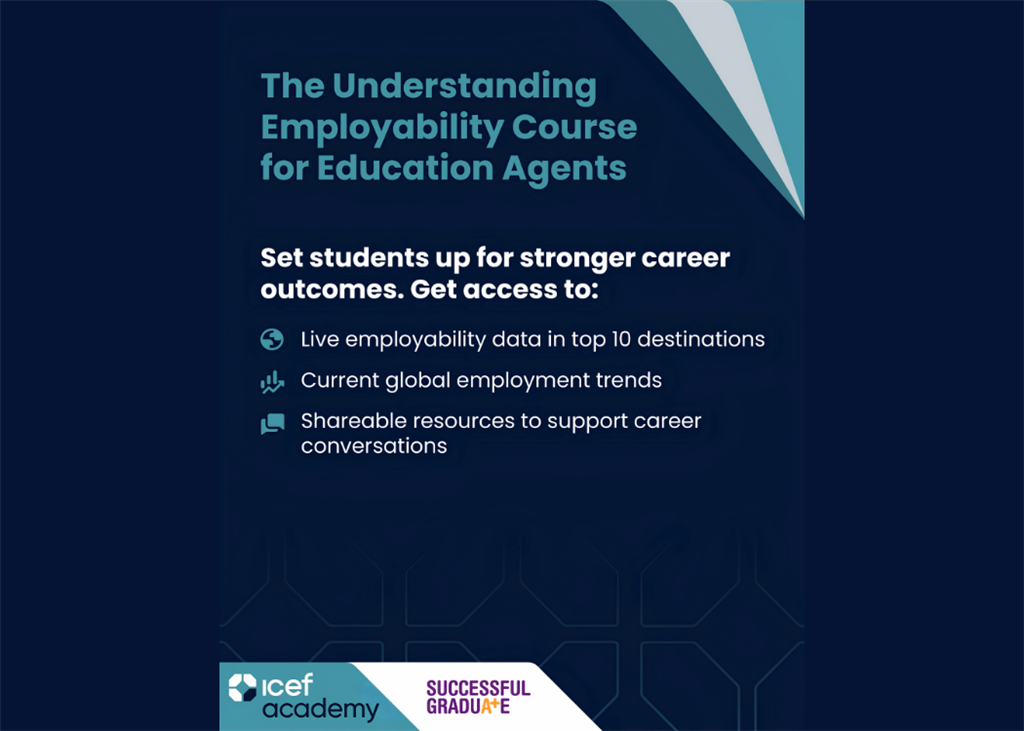
The Understanding Employability Course for Education Counsellors, developed by Successful Graduate and available through ICEF Academy, has been created to help professionals working in international education build that understanding and provide more informed, evidence based guidance to students and their families.
Academic reputation will always play an important role when students compare institutions and study destinations, but it is only one part of the decision. Career prospects, graduate outcomes and return on investment are becoming increasingly influential, particularly as families evaluate the financial and personal commitment involved in studying overseas.
ICEF highlights this changing behaviour through its 2025 Agent Voice survey, which found that students and parents are placing growing weight on graduate outcomes and return on investment when assessing their options. This means education counsellors are increasingly expected to discuss more than admissions and academic programmes. Students may also want to know what employers are looking for, which industries are recruiting, what skills will strengthen their prospects and how well an institution prepares graduates for the workplace.
Having these conversations effectively does not mean that education counsellors need to become career advisers or labour market economists. It does, however, mean having enough knowledge to put study choices into a wider context and knowing where to find credible information when students ask career related questions.
One of the greatest strengths of effective education counselling is the ability to connect a student's interests and ambitions with an appropriate study pathway. Employability knowledge adds another layer to that process.
A student considering a business degree, for example, may be interested in much more than the subjects covered by the programme. They may want to know which skills employers value, how graduates typically enter the workforce, whether internships are available and how employment prospects differ between destinations. Another student considering technology, healthcare or engineering may need guidance on emerging skills needs, graduate recruitment practices or the realities of entering a particular profession.
The Understanding Employability Course for Education Counsellors is designed to give participants a broader picture of these issues. The online, self paced course explores the global labour market, employer expectations, graduate recruitment, workplace readiness and the factors that contribute to employability. It also helps participants identify credible sources of information so that their understanding can continue developing as employment markets change.
For international education professionals, this can make counselling conversations considerably more valuable. Instead of viewing a programme purely through the lens of subject content, tuition fees and destination, counsellors can begin considering how the complete student experience supports future career development.
Rankings can provide useful information, but they cannot answer every question a prospective student has about their future. Two institutions offering similar programmes may provide very different opportunities when it comes to work placements, employer engagement, career services, professional development or practical experience.
This is where a stronger understanding of employability can help counsellors evaluate education providers more thoroughly.
The course introduces practical tools and frameworks that participants can use when considering the employability support offered by institutions. It also explores global labour market trends and skills priorities across major study destinations, giving counsellors a wider perspective when discussing options with students.
This does not mean promising a student a particular job or salary after graduation. Employment outcomes depend on numerous factors, including the individual student, the programme they choose, economic conditions, immigration rules, professional requirements and the labour market at the time they graduate. Instead, the aim is to help students make decisions with a clearer understanding of the factors that can influence their prospects.
That distinction is particularly important in international student recruitment, where expectations around careers and post study opportunities must be managed responsibly.
A qualification remains important, but employers frequently consider much more than academic achievement when recruiting graduates. Communication, teamwork, problem solving, adaptability, digital capability and professional awareness can all contribute to workplace readiness.
For students, these skills are often developed throughout the wider study experience rather than through lectures alone. Internships, project work, volunteering, work integrated learning, industry engagement and extracurricular activities can all play a part.
Education counsellors who understand these factors are better placed to encourage students to investigate what an institution offers beyond the curriculum. Questions about career support, internships, industry connections and opportunities to develop practical skills can become part of the study selection process rather than something students think about shortly before graduation.
The Understanding Employability Course explores graduate recruitment processes, employability skills and employer expectations, helping counsellors understand how the journey towards employment can begin well before a student receives their qualification.
A particularly useful aspect of the course is that enrolment also includes lifetime access to Successful Graduate's Agent Resource Hub.
Because labour markets constantly evolve, employability knowledge cannot simply be learned once and considered complete. New occupations emerge, skills shortages change, salaries move and different destinations introduce new policies affecting graduates and employers. Having access to regularly updated resources can therefore help counsellors keep their guidance relevant.
The Agent Resource Hub includes a Live Global Employability Dashboard covering employability scores, visa friction ratings and salary information across 100 in demand occupations and ten leading study destinations. Counsellors can also generate customised one page summaries that can be used when discussing options with students.
Participants also gain access to the 2026 Education Agent Labour Market Report, which brings together information on graduate outcomes, vacancy data and frameworks for discussing return on investment with families. An International Student Job Readiness Guide is also included to help students think about career preparation well ahead of graduation.
These resources can be particularly valuable for agencies seeking to make career focused guidance a more consistent part of their student counselling process.
Education agents occupy a unique position within the international student journey. In many cases, they are among the first people students speak to when considering studying abroad and remain an important source of support throughout the application process.
That gives counsellors an opportunity to introduce career thinking much earlier.
Rather than asking only what subject a student wants to study or which country appeals to them, counsellors can explore what the student hopes that education will eventually enable them to do. This can open conversations about career ambitions, transferable skills, work experience, professional development and the types of opportunities available within different markets.
It can also lead to more thoughtful comparisons between institutions. A programme that looks attractive academically may become even more compelling when it includes strong career services, industry projects or placement opportunities. Conversely, understanding labour market realities may encourage a student to investigate alternative programmes that align more closely with their long term goals.
For agencies, this deeper approach to counselling can also demonstrate value. Students have access to enormous amounts of information online. The role of the counsellor is therefore increasingly about helping them interpret that information, place it into context and make decisions that reflect both their immediate academic goals and their future ambitions.
ICEF Academy describes the Understanding Employability Course for Education Counsellors as a short, self paced online programme designed for professionals involved in international education decision making, including agency owners, managers, education agents, counsellors and admissions and conversion teams. The course takes approximately one to two hours to complete.
Its relatively compact format makes it particularly relevant for experienced professionals who want to strengthen a specific area of their counselling knowledge without committing to an extensive training programme.
More importantly, it addresses an area that is likely to remain increasingly important within international student recruitment.
Students want to understand where their education might take them. Parents want reassurance that the considerable investment involved in international study is being considered carefully. Institutions are placing greater emphasis on graduate outcomes and employability support. Employers, meanwhile, continue to adapt their expectations as industries and skills requirements evolve.
Education counsellors sit at the intersection of these conversations.
The more confidently they can help students understand the connection between education, skills and career pathways, the more useful their guidance can become.
Successful international education counselling should ultimately help students make choices that are right for them, not simply secure an enrolment.
Understanding employability provides another valuable dimension to that responsibility. It allows counsellors to help students think beyond admission and consider how their course, institution and destination might contribute to their professional development over the years that follow.
The Understanding Employability Course for Education Counsellors offers a practical introduction to this increasingly important area, supported by ongoing access to labour market information and career preparation resources through the Agent Resource Hub.
For education agents and counsellors who want to strengthen the career focused element of their student guidance, it offers an opportunity to develop knowledge that can be applied directly to everyday conversations with students and families.
Enrol in the Understanding Employability Course for Education Counsellors here.







2026 SchoolsandAgents (C) - Developed by Lunarsors