
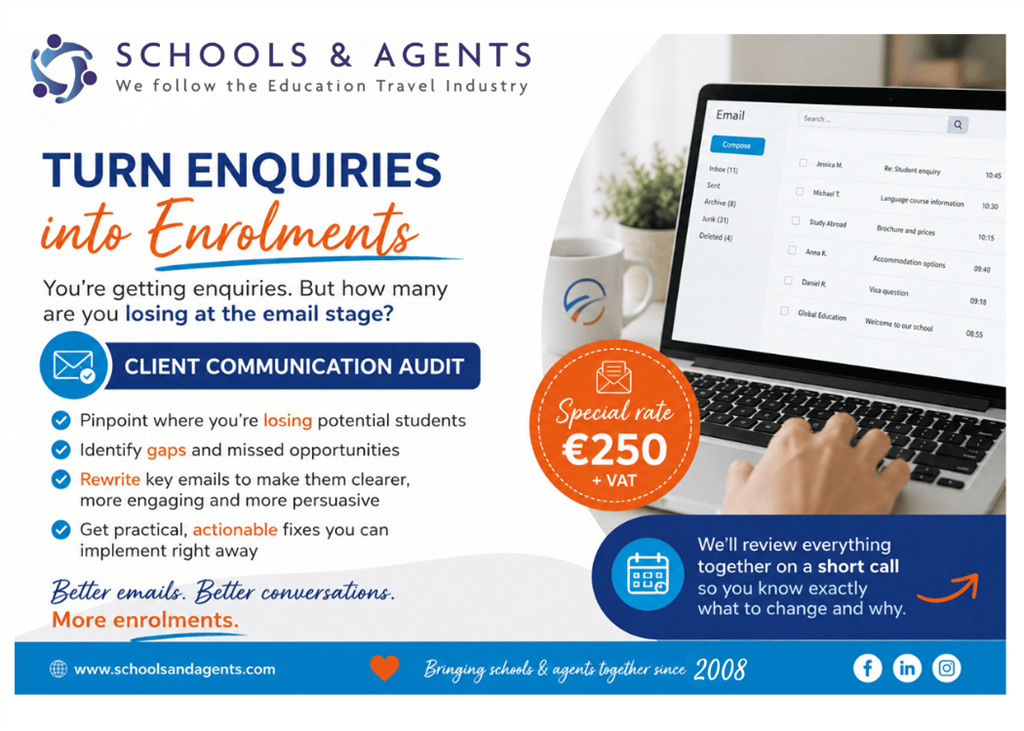
Every enquiry represents an opportunity. Behind every email is a prospective student looking for reassurance, answers and a reason to choose one school over another. Yet many education providers invest significant time and money generating enquiries without paying enough attention to what happens next.
The reality is that attracting enquiries is only the first step. Converting those enquiries into confirmed enrolments depends heavily on the quality of communication. Even schools with excellent programmes, experienced staff and strong reputations can lose prospective students simply because their emails fail to build confidence or encourage action.
For education providers, agents and service providers working in international education, reviewing client communication can often reveal simple improvements that make a measurable difference to conversion rates.
Most schools assume that if they reply quickly, they are doing enough. Speed is important, but it is only one part of the equation.
A response can arrive within minutes and still leave the student unsure about what to do next.
Many enquiry emails contain every piece of information a student could possibly need, yet they lack warmth, structure and direction. Instead of guiding prospective students through the decision making process, they simply answer questions and wait for another reply.
Every unanswered concern or unclear message increases the likelihood that a student will contact another school instead.
After reviewing countless conversations between schools and prospective students, several patterns appear again and again.
Many responses include lengthy explanations about courses, accommodation, visas and fees all within a single email.
While the intention is good, too much information can overwhelm prospective students, particularly those communicating in a second language.
Simple, well organised communication is often far more effective.
Students are not only comparing prices and destinations.
They are also judging how a school makes them feel.
Friendly communication, genuine enthusiasm and personalised responses help build confidence long before a booking is confirmed.
Many emails answer every question but never encourage the student to continue the conversation.
A simple invitation to arrange a call, submit an application or ask further questions can significantly improve engagement.
Without clear guidance, many conversations simply come to an end.
Templates save time, but they should never sound robotic or impersonal.
Students want to feel that someone has taken the time to understand their goals and circumstances.
Small personal touches often make a lasting impression.
International education has become increasingly competitive.
Students often contact several schools before making a decision, and education agents regularly compare providers on behalf of their clients.
Your email communication is frequently the first real interaction someone has with your organisation.
A professional website may generate interest, but your replies build relationships.
Every message should reinforce your school's values, demonstrate professionalism and make the decision process easier for prospective students.
Improving communication does not necessarily require new software or expensive marketing campaigns.
Often, relatively small adjustments can produce noticeable improvements.
These might include:
When these improvements are applied across an admissions team, the overall student experience becomes stronger from the very first enquiry.
It is difficult to identify weaknesses when reviewing your own emails.
What feels clear internally may not feel clear to a prospective student who has never studied abroad before.
An independent communication audit provides an objective assessment of how enquiries are being handled.
By reviewing real email conversations, schools can identify where potential students lose interest, where opportunities are being missed and how communication can become more persuasive without becoming overly sales focused.
The process also helps admissions teams become more consistent, ensuring every prospective student receives the same high standard of communication.
Marketing will always play an important role in attracting enquiries.
However, successful recruitment depends just as much on what happens after a prospective student clicks the enquiry button.
Every email is an opportunity to answer questions, build trust and move someone one step closer to choosing your institution.
By investing time in improving communication, schools can maximise the value of the enquiries they already receive, strengthen relationships with education agents and ultimately increase enrolments without increasing their marketing spend.
Sometimes the biggest opportunity for growth is already sitting in your inbox.












2026 SchoolsandAgents (C) - Developed by Websuccess